HPK Search

Search High Paying Keyword Fenomenal - 2016

Copyright © HPK Search | Published By Gooyaabi Templates | Powered By Blogger
Design by WebSuccessAgency | Blogger Theme by NewBloggerThemes.com
Powered by Blogger.
Showing posts with label gambling. Show all posts

Wednesday, April 20, 2011

Investing or Gambling? Part 10: Conclusion

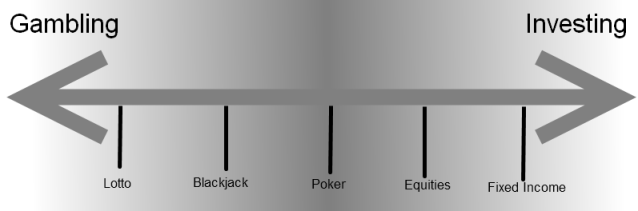
During the past 9 weeks, we have presented a series of articles questioning whether investing and gambling are synonymous.
  • Week 1, we provided an overview of the topic and laid out an outline of the posts to follow.
  • Week 2 we defined investing and gambling. We noted the three main distinctions that an investor has verses a gambler: ownership of an asset; value derived from market demands; and option to sell. We also summarized the two similarities: success is based on probabilities; and the future outcomes are unknown.
  • In Week 3, we discussed why this topic is important at this time. We pointed out that because of the weak U.S. economy, many people are desperate to earn a living and that temptation to invest and gamble is everywhere.
  • Week 4 concentrated on the differences between investing and gambling. Again, we reiterated that investing involves ownership but gambling does not. Also, we indicated that gambling infers fun while investing infers work.
  • Week 5's article focused on a few of the successful gamblers and investors or our time. Most of these individuals are currently earning substantial livings concentrating on both of these disciplines. We pointed out that most: were very highly educated and possessed a deep knowledge of mathematics; worked very hard to refine their skills; and dedicated many years of their lives to perfecting their livelihood.
  • In Week 6, we presented the various investment products that investors and gamblers have the options buy or play. Investors can be conservative and focus only on CDs or Bonds, or they can get excitement and thrills buying derivatives, commodities, collectibles, or other unique items. Gamblers can also vary their risk by buying lottery tickets, analyzing sporting events, playing board games or casino poker.
  • Week 7's discussion focused on the profile of typical investors and gamblers. We noted that  successful gamblers were more: in control of their spending; optimistic about the future; and were more prepared for retirement. Both professionals were highly educated and made analytical decisions. Neither view their profession as gambling.
  • In Week 8, we indicated the two mathematical skills that both investors and gamblers possessed were the ability to mentally: construct complex decision trees; and know the probability of success of each outcome by heart.
  • Lastly, Week 9 presented the concept of manipulation in the two different industries. Our current belief is that the gambling industry is more regulated and less likely to be manipulated. Whereas, the investment industry is regulated only on a macro level, which leaves the doors to manipulation wide open.
In our opinion, we believe that investing is much more risky than gambling is to the common man. Both professions are comprised of individuals whose sole purpose is to earn a substantial amount of money. Those who gamble usually understand their odds of winning and of losing. They typically wager small amounts of money and participate for the enjoyment or entertainment factor.

However, these same individuals invest comparatively large sums of money in the stock market and 401k accounts. Rarely do they understand the products they are buying or the potential risks of losing money. Far too many people have lost their children's educational funds during the collapse of the dot.com bubble, and are now underwater on their home's real estate investment.

Those who are against legalized gambling will point to the losses of the compulsive gambler, saying how those individuals are sick, irresponsible, and have lost everything.

Yet the losses of our entire population during the recent financial meltdown serve as a lesson in understanding risk. We truly believe that you should never buy anything that you do not understand, and more importantly, never invest with only the hope of attaining a win-fall, because this is when investing becomes simply another word for gambling.

Wednesday, April 13, 2011

Investing or Gambling? Part 9: Is Manipulation Possible?

The Last Days of Lehman BrothersImage via Wikipedia
So now that we have: defined the differences between gambling and investing; looked at successful professionals of both disciplines; listed a subset of gambling and investing instruments; and identified the mathematical foundations of both, we are ready to ask ourselves:
Can Gambling & Investing 
Outcomes be Manipulated?

Given the recent events that have driven oil prices through the roof once again, and the exposure of the Madoff Ponzi scheme, we can quickly agree that certain investments may indeed be manipulated.  Additionally, we have all been taught the risks of gambling with regard to: horse races being fixed; people who cheat at poker; three card monte; card sharks; pool hustlers, etc.

Absolutely!

Unless the common investor or gambler understands the outside risks that they face from their competition, they are merely sitting ducks for the professionals who specialize in certain products.

While it is beyond the scope of this article to identify all places where an market prices and game outcomes can be manipulated, we believe it is important to illustrate some of the potential schemes that are aimed at taking your money.
  • Buying Commodities. With all the turmoil in the world, the price of gold has increased dramatically. As this metal increased in value, many small Gold retailers have aggressively advertised the reasons why you should buy gold. However, most of these firms are only cashing in on the buying frenzy. They do not care if the price increases or declines. They will make a commission either way. You are the one that will lose.
  • Same is true if you buy stocks as an individual investor. For every 100 shares that you buy, someone else may be buying thousands. Most of those who buy in large quantities have much more timely information than you. Unless you can time the market right, there is a good chance that the market will turn against you. All you can do is to go along for the ride.
  • Playing casino poker. If you enjoy visiting a casino and playing at a poker table, chances are that you are playing against one or more professionals. These folks play every day and this is their living. They usually have much more money than the common visitor and can therefore influence your playing decisions. You may be lucky to win a few good hands, but in the long run, you will probably lose most of your money to these individuals.
  • Horse racing. This is a sports gambling event that you bet against others. Many of those study the past performances and understand the subtleties of individual tracks. However, your main competition is the horse owner, trainer, track workers, and rider community. These are the folks who make a living off their investment. While many of the owners may not make a profit, they will probably not lose money either. This is a small community and they keep everyone in business by taking your hard earned money when you least expect a loss.
As a small investor or gambler, you are always at the mercy of those professionals who specialize in a particular investment type, sporting, or gambling game. Always be aware that they have more money than you which can alter the payout odds or investment prices. Most of the people working against you are in business to earn their own living. As such, they are not targeting you as an individual, but rather you as a member of a class of the uninformed.
Enhanced by Zemanta

Wednesday, April 6, 2011

Investing or Gambling? Part 8: Mathematical Similarities

Mathematics plays an important role in the decision making of both investors and gamblers. While some of the analytical quantification methods are substantially different, we believe that there are two common techniques that inherently similar. These are:
  • Decision Trees, and
  • Probability Analysis.


Decision Trees
Whether written or conceived, both gamblers and investors continuously make (and often repeat) decisions based on possible outcomes. After each decision is reached, a new set of possibilities brings forth a new set of possible outcomes. Each decision node may have two or more potential choices that can then be made. The diagram below illustrates a sample two level set of possible decision paths.

Source: Decision Tree: How to do it
From a financial viewpoint, a stock market investor typically has three choices he can initially make: (1) buy a stock; (2) sell a stock; or (3) do nothing. Once these decisions are made, the choices will vary depending on the path taken. In the case of one who buys a stock, he now has at least 4 new options available: (a) continue to hold; (b) sell the position; (c) buy more; or (d) hedge. Had the investor sold a stock short initially, he too has various choices to make regarding his position. And, if the investor initially did nothing, then he would circle back to the initial set of choices to be made.

From a gambling viewpoint, a player makes decisions based on the type of game or activity he is entertaining. If the person is playing poker, he has the choice to: (1) fold; (2) pass; (3) raise; or (4) call after each different card is dealt. Each time, his decision will be based on his previous choice and the final possible outcomes. Lottery players have the choices of: (1) playing; (2) not playing; or (3) playing and buying a multiplier. If the person decides to play, he must then decide to: (a) ask for quick picks or (b) pick his own number. If he choose the latter, then he decides: birthday numbers; even odd; hot cold; etc. Lastly, if he wins a large prize, he must then begin making decisions based on the financial decision tree above.


Probability Distributions
Most of the decisions that the investor or gambler makes are based on the underlying probabilities of success. These probabilities are based on some type of mathematical model. In the financial world, a Normal Probability Density Function is typically used. Ranges of numbers are quantified, or counted, in terms of Standard Deviations as shown in the figure below.

Source: SPC Tools - Control charts
Let us return to the investor above who initially purchased a stock at decision point 1. His decision to sell, hold, or buy more will be determined by the the price change in his stock. If the change remains within 1 standard deviation (based on volatility), he will most likely hold. If it drops more than 2 or 3 standard deviations, he will probably sell. If new positive economic information about the stock is released, he will probably buy more.

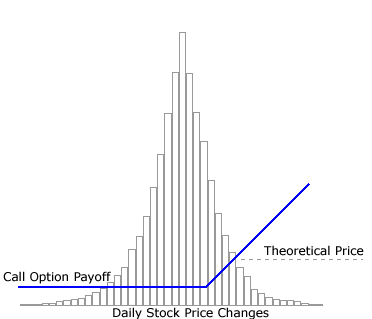
Some financial instruments are priced and valued strictly on the amount of price change and probability of occurrence. In particular, Call and Put Stock Options are priced this way. As seen below, a call option price increases when the stock goes up, but this is based on a probability weighted amount. Thus, the stock price change movement must be positively larger than the initial premium paid in order for the investor to earn a profit.
Source: Option Pricing Models
Similarly, poker player make similar decisions based on probabilities. Consider a 5 card stud player that remains until all 5 cards are dealt. If he holds a pair, then he knows that approximately 42% of all hands will have pair. He also knows that his hand is better than 50% of hands, and that approximately 8% of all hands will beat his. Using this information, he will then decide to call, raise, or fold.


Summary
In this brief article, we illustrated how similar investors and gamblers are in decision making. Underlying each conscious decision is the understanding of the underlying mathematical probabilities of successfully earning a profit. While the investments or games may vary from simple (buy a stock or flip a coin), to complex (derivative options & swaps or poker and backgammon), nearly the same mathematical properties can be used to quantify success.

Wednesday, March 30, 2011

Investing or Gambling? Part 7: Profile of a Typical Investor and Gambler

When we first began researching the profiles of typical investors and gamblers, we found many sources describing gamblers but relatively few discussing investors. The information we read about gamblers was written from either the "problem gambler" viewpoint, or that of a "casino operator". The investing articles were written for purposes of attracting "day traders" to discount brokers, or describing why investors typically lose money.

Rather than summarizing this information once again, we decided to explore the underlying traits and skills that both participants exhibit.   

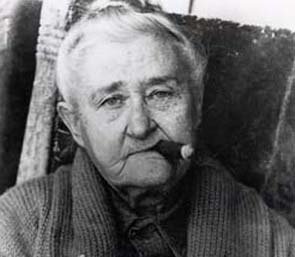
In the old days, we all have images of savvy boardroom executives smoking cigars while formulating important business decisions in a smoke filled boardroom. In contrast, we also envision the small old wiry racetrack bettor studying his racing forms while the cigar ashes threatened to fall off.

Source: Frontier Gamblers - Poker Alice
Today, we find that the cigars have mostly disappeared and that the executives and gamblers have become much much younger.

It appears that youth has overtaken our society.

But not so quick. During the past few years, our economy has faltered, leading to widespread unemployment. Executives and thousands of regular employees have been laid off. Graduates from colleges cannot find jobs in fields of their study. Out of frustration, many of these individuals have turned to gambling or investing in hopes of earning a living to support their families.

From a demographic viewpoint, we find that age has no bearing on the profile of these persons. In Wall Street, the mentality is the younger the better. They believe the younger you are, the more mathematical and abstract you think, the better you will trade. However, the major difference between these individuals and the ordinary person is that they are playing with someone else's money. These young mavericks will earn a very handsome bonus regardless of whether they win or lose.

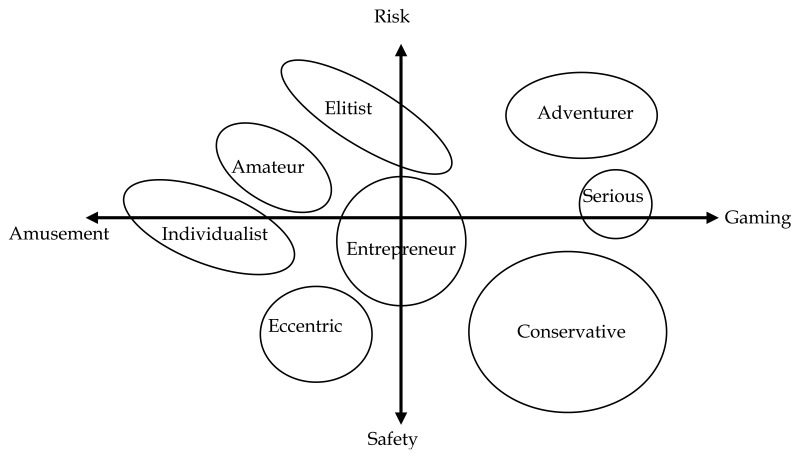
The illustration below was designed to describe the thinking of various gamblers. However, those involved in investing (or trading their own accounts) are depicted as well.  What we learn is that the average individual  is best described as an entrepreneur. They try to be middle of the road, balancing amusement with gaming while taking average risks. Whereas, individuals and amateurs lean more toward amusement, and elitists take more risk.
Source: Gambling - Contexts and addictions

According to the Forbes article, The Average Investor Is His Own Worst Enemy, average investors fail to succeed because they are overly confident, shortsighted, and have bad timing. The same is true with the average gambler.

What novice investors and gamblers believe is that they are playing on an equal level with all the other participants. Both fail to realize that they are actually playing against highly educated and highly financed professionals. These professionals have more information at there disposal, and know the underlying probabilities by heart. Consider a professional poker player. He knows his probability of winning as each card is drawn while the common individual just thinks in terms of luck. To further complicate the equation, the professionals are playing in teams while the individual is playing alone.

Whether the professionals work independently or for a company, they have dedicated their livelihood to learning their trade. Most began small and have worked their way up the income chain. Most have made associated contacts that help to keep them informed.

If you have dreams to pursue your own career as a professional investor or gambler, be prepared to study, memorize, and practice. Learn to make your own decisions but always consider the advice of others. You must always be retrospective and analyze the plays that succeeded and failed. And, never make reckless decisions, especially out of dispair.

According to Harrah's Gambling Survey 2006, successful gamblers (and we interject investors) believe they are more:
  • in control of their spending and borrowing
  • optimistic about the future
  • prepared financially for retirement
and more likely to:
  • view work as a career
  • research purchases more
  • dine out
  • have higher earnings
than the common investor. If you fit these profiles and are willing to spend years (rather than days) preparing for your future, then you too may become a successful gambler or investor as well.

Wednesday, March 23, 2011

Investing or Gambling? Part 6: Investment Options

Both gamblers and investors have a wide range of investment options in which they can place their money and hope to earn a profit. In both cases, a person puts down some money with the hope of having more sometime in the future.


Investing
From the investing side, the vehicles that are available range from near zero risk to highly leveraged and very risky strategies. The charts below illustrate various investments that a person can make, along with the associated risk taken. For purposes of this paper, we define risk as the chances of losing all or part of their money.


Source: Create Wealth Through Long-Term Investing ...
Below we have listed a number of investing options that individuals can make. Typically, most people are aware of putting their money in bank CDs and Savings Bonds. Additionally, many have purchased outright stocks, mutual funds, and sometimes commodities. As one's wealth increases, investors have branched out of these and invested in currencies, private equity companies, hedge funds, real estate, and various sports related items.
  • CDs & Bonds (Savings Bonds, US Govt Debt, Municipal, Corporates)
  • Asset Backed Bonds (Mortgages, Credit Cards)
  • Stocks
  • Commodities (Gold, Silver, Oil, etc)
  • Currencies
  • Mutual Funds
  • Hedge Funds
  • Private Equity (Small companies)
  • Collectibles (Fads, Antiques, Art)
  • Real Estate (Outright land, REITs)
  • Sports (Teams, Horses, Race cars)
Most common individuals that invest in stocks do so with the idea that they will always make money. However, that is not the case anymore. The graph below shows the Dow Jones Average from 1975 to 2008. As we can see, those who invested early were almost assured a profit. But from 1996 to 2008, there was a bumpy ride. Lots of money was lost around 2001 to 2003 and then again in 2008.


After a while, investors who have become comfortable with stocks begin to buy futures and options. These exotic vehicles allow the persons to leverage their investments by outlaying a small portion of their money and purchasing the underlying stock or bond only when a profitable return is met. The image below is a payout graph for a call option. In this example, the $40 call option would be purchased for $2 only. If the price of the stock rises above $42, then the investor would exercise his option to buy the stock at $40 and lock in a guaranteed profit. However, if the price never reached $42, then the investor would simply lose his $2 investment.


Gambling
For the gambling investor, there are numerous legalized vehicles that allow participation. Most notably are lotteries, organized parimutuel racing, casinos, and charitable games. Without ranking these in order of risk, gamblers have the opportunity to play:
  • Lottery (+ Keno)
  • Card Games (Poker, Blackjack, etc)
  • Craps (Dice)
  • Roulette
  • Slot Machines
  • Sports Games (Outcomes, Scores, etc)
  • Racing (Horses, Dogs, etc)
  • Games of Skill (Backgammon, Chess, etc)


Summary
The risks of gambling are quite different than investing. Most notably is that the event horizon is relatively short. For example: a lottery drawing may take several days before it occurs; a football or baseball game may take hours to play; a poker hand may take minutes; and a roulette spin may take seconds.


A secondary difference is that the gambler usually has direct involvement in the game, whether he is a participant or a spectator. Third, gambling payouts are usually all or nothing, win or lose. For example, only one person wins a poker hand or racing event. Investors, on the contrary, do not typically lose their entire investment.

One may argue that the gambler has an advantage over the investor because there may be an individual skill involved. While that is true, a successful investor is also skilled in understanding their own underlying products. Thus, they too have control over their destiny.

Lastly, many may say that gambling only involves luck. That can also be said about investing. Luck has a lot to do with timing and market sentiment as well.

Wednesday, March 16, 2011

Investing or Gambling? Part 5: Spotlight on Successful People

Doyle Brunson in 2006 World Series of Poker - ...Image via Wikipedia
We are all enamored by the success stories of many individuals. For those of us interested in investing, we have role models that we wish to emulate. Similarly, for those of us who wish to be successful gamblers, we point to those people who have made it big and say we can do it too.

Below,  we have highlighted six practitioners from both the gambling and investing professions who have made significant contributions to their societies and amassed a fortune at the same time. The list is intended to be a cross-section of representatives who have helped their professions advance. The list is not prioritized nor is it complete, as there are many more people who have succeeded as well.


Successful Gamblers

Doyle Brunson: Considered to be the patriarch of modern poker, this famous gambler revolutionized poker in 1978 when he published his book called Super System. Times were not always easy for this Texan who went to college on basketball and track scholarships. But, after he shattered his leg in an accident, and was diagnosed with terminal cancer in 1962, this legend learned to become successful playing the game that he loved. Quote: Through the years I've never stopped doing things, thinking about things, and I still think young.

Gonzalo Garcia-Pelayo: A Spanish mathematician and record producer who believed that roulette wheels were not completely random. Began to exploit the game by recording winning numbers on thousands of spins, and then analyzed the data. Afterward, he used this data to win over �2 million.

Dominic LoRiggio: Became famous for controlling dice while playing Craps. Learned the skill through years of practice and identified ways to set, grip, and toss the dice to achieve a desired roll. Called the Dominator, he says it is a matter of simple physics. Claims to have won thousands of dollars at various casinos.

Edward Thorp: The creator of card counting, a technique by which a player can keep track of the cards that are played and those left in the deck. Most notably recorded in his 1962 book called Beat the Dealer. He has a M.A. in Physics and a PhD in mathematics, and taught at M.I.T. He published a second book in 1967 called Beat the Market and then started a derivatives based hedge fund.

Admiral Henry John Rous: Devised the first methodology for handicapping horse racing. It was based on the Weight for Age Scale which tabulates results based on a jockeys weight and a horses age.


Billy Walters: One of the instrumental managers of The Computer Group, a sports betting operation, that won millions by analyzing all the statistical data about the teams, weather, and more. The Computer Group was forced to break up in 1987, but Billy Walters has continues to win annually using a team of associates who specialize in various aspects of the games.


Successful Investors

Myron Scholes: Co-inventor of the Black-Scholes Option Pricing Model, he was a managing director and co-head of fixed-income derivatives at Solomon Brothers. Then, he co-founded the hedge fund, Long-Term Capital Managment which obtained annualized returns over 40%. The fund failed in 1998 after losing $4.6 billion in four months. He is now chairman of Platinum Grove Asset management.

Tutor Jones: the founder of Tudor Investment Corporation. Later organized the Tutor Group that includes the former and a variety of affiliates. Is actively involved in trading, investing research and more. Current estimated net worth is $3.2 billion. Quote: The most important rule of trading is to play great defense, not great offense.

Warren Buffet: Formed Buffet Associates in 1956 with 7 limited partners and $150,000. Buffet used $100 of his own money. After 10 years, his assets rose by 1,156%.  Then he bought control of Berkshire Hathaway and became Chairman in 1970. Now has net worth of $47 billion. Quote: Rule No.1: Never lose money. Rule No.2: Never forget rule No.1

Peter Lynch: Earned the reputation of being one of the best stock-pickers in the world after managing Fidelity Magellan fund from 1977 to 1990. Those who invested $1,000 in 1977 would have worth of $28,000 in the 13 years during his control. Favorite Principal: Invest in what you know.

Benjamin Graham: The Father of security analysis and value investing. Wrote two books on these topics in 1934 and 1949 which are considered to be requites for all investors. A mentor and early employer of Warren Buffet. Principle: Know What Kind of Investor You Are

George Soros: Co-founded the Quantum Fund in 1970 at age 40. Aquired most wealth by acheiving  returns of 4000% during the next 10 years. Is now estimated to have $11 billion. Quote: The financial markets generally are unpredictable. So that one has to have different scenarios.. The idea that you can actually predict what's going to happen contradicts my way of looking at the market.

Michael Moritz: A journalist for Time that became a Venture Capitalist two years later in 1986. Joined Sequoia Capital and had made huge returns by investing in Google, Yahoo, PayPal, and many others. Fell out of the Billionaires club in 2008, but still has lots more money.


Summary
By reading the stories of the individuals above, we can identify certain traits common to all. First, most are highly educated.  They all share a deeper knowledge of mathematics and used this skill as a tool to analyze their content. All are hard working and highly dedicated. Success didn't come overnight, but after years of studying, practicing, and hard work.

For us to succeed then, we must conclude that we can't give up. Some have made mistakes, earning a fortune and then losing all or part of it. However, they never gave up on their pursuits and all succeeded in the long run.
Enhanced by Zemanta

Wednesday, March 9, 2011

Investing or Gambling? Part 4: The differences between the two.

Thoroughbred racing at Churchill Downs.Image via Wikipedia
There are two primary differences between investing and gambling:
  1. Ownership of an asset, and
  2. Entertainment.
First, in investing, an investor purchases an asset with the expectation that it will appreciate in value and be worth more in the future than it is at the present time. When gambling, a participant also invests a certain amount of money with the anticipation of winning. However, most gamblers understand that the chances of losing their investment far outweighs their chances of winning.

Second, gambling is entertainment, it is fun. Many people love to go to casinos to play the slots, poker, roulette, or craps. Whether they return home with the same (more, or less) amount of money, the person is usually happy knowing that they purchased a few hours of entertainment. To the lottery player, they have purchased a day or two of dreams. However, investing is work and that is not typically fun. Except for those who purchase antiques or collectibles, an investor obtains very little entertainment value.

Similarities
Aside from the outlay of money, there are few similarities to investing an gambling. In these, both:
  • Risk capital to earn a profit.
  • Are trying to predict the future outcomes of a certain event.
  • Require skill to be successful.
  • Are subject to external manipulation.
  • Hope to get rich.
  • Can lose money.
  • Value may be arbitrarily contrived.
Examples of Investing and Gambling
InvestingGambling
StocksLottery
BondsPoker
CoinsBackgammon
Real EstateHorse Racing
OptionsCraps
Cars & HorsesSlot Machines
CollectablesFootball Games

Differences
 When considering the two, there are many more differences between investing and gambling that can be identified:
  • An investor's time horizon is endless, whereas a gamblers horizon is fixed.
  • An investor expects to earn a profit, but a gambler expects to lose.
  • The financial return on most investments is quantified, but a gambler's is infinite.
  • Investing returns are incremental, but gambling is all or nothing
  • An investor's asset fluctuates based on supply and demand. A gambler's asset changes only on anticipated success.
  • Investors do not typically influence the value of their asset. Gamblers have direct control over the value of their asset.
  • Investors rarely lose their entire investment. Gamblers usually lose most of the money wagered.
  • Investments are subject to economic pressures. Gambling games have no economic pressure.
Negative, Zero, and Positive Sum Games.
Most educators consider most forms of gambling to be Negative Sum Games. This means that less money is returned back to the players than the money raised. However, economists liken investing to a Zero Sum Game, meaning that all the money invested is returned back to the investors. Depending on your viewpoint, this may or may not be true. For example, assume that you bought an asset that was destroyed in a fire, lost or stolen. Unless you had insurance (and paid more for this risk), you would lose your entire investment. Depending on the type of asset, others may then become more valuable, or not change in value at all. Investing in bonds can be a Positive Sum Game to the purchaser. Depending on the security, there would be very little risk of losing money, and the payouts would certainly exceed the amount invested.

Summary
In summary, most investors and gamblers participate with the ultimate intention to earn more income. Investors utilize their financial capital to purchase assets that they hope will appreciate. Gamblers, on the other hand, play games with the hope of winning money. Both want to become rich and are faced with skillful competition that can out buy or out play them. Thus, our conclusion is that both these are risky and the unprepared are subject to losing all or part of their money.
Enhanced by Zemanta

Wednesday, March 2, 2011

Investing or Gambling? Part 3: Why Its Important.

Americans are enamored by wealth. We all dream about being independently wealthy, working as little as possible, and obtaining the most amount of money as possible. But, the harsh reality is that very few of us achieve our goals of becoming millionaires.

For the past few years, the United States has been in a recession. Many individuals have lost their jobs and have remained unemployed for two years or more. At the same time, students graduating from college have found it increasingly more difficult to find employment opportunities. Many students have taken the opportunity to earn a Graduate degree with the hope that they will be more marketable when they finish their advanced education.

People are desperate.

With financial pressures mounting, many unemployed individuals have sought alternate avenues for generating family revenue. Some have become day traders, and others have become professional gamblers.

Temptation is everywhere.

The radio and television advertisements are full of get rich quick schemes, telling us to buy gold, refinance our houses, play the stock market, play the lottery, go to a casino, and more. We are bombarded with stories of successful investors such as Warren Buffet, George Soros, Donald Trump, and Wall Street tycoons who made fortunes playing the markets. At the same time, we see the glamorous lifes of the ESPN World Series of Poker stars, and hear about the fabulous casino and lottery winners.

Taking a gamble.

In the past, the division between gambling and investing was clearly defined. Our images of gamblers were those betting at race tracks, the down on their luck poker player, or the gambling addict. Investors wore suits and ties. They attended meetings and lunches, and put together multi-million dollar deals that rewarded them handsomely.

The internet breaks the barriers.

But with the recent advances in technology, the trading tools previously available only to those in the investment business are now available to all of us. We can now learn to use technical trading tools right in our home for buying and selling stocks. As we learn more, we can buy more exotic products, like options. A few years ago, everyone could play online poker. Although this is now banned, players can continue to refine their skills by playing for fun on a variety of sites.

This past January, 60 Minutes aired a Sports Bedding feature on Billy Walters, a sports betting legend who has never had a losing year.


Because temptation is everywhere, many individuals are attempting to earn a living as either a professional investor or a gambler. I have several friends who stopped working years ago and now earn their income solely from trading stocks. Lately, I've seen a few young college graduates decide to become professional poker players in Atlantic City and Las Vegas, rather than working in the corporate world.

Everyone wants your money.

What I've learned from analyzing lottery games and talking to these individuals is that achieving success is difficult.  Everyone out there wants your money. The more desperate you are, the easier it is to lose everything. Regardless of whether you participate in investing or gambling, you are competing against professionals that have much more money and much more knowledge. They all know the odds of winning and losing, and make their bets accordingly.

Don't be a fool.

Therefore, we felt that it is important to write this series of articles about investing and gambling. In last weeks article, we defined these two concepts and showed how they are different. In subsequent weeks, we will illustrate why the distinction between the two is blurred. In the end, we hope to educate you to the risks of each profession, and to help you keep your hard earned money.

Wednesday, February 23, 2011

Investing or Gambling? Part 2: The Definitions

In this second installment of our analysis, we will examine the definitional differences between gambling and investing. This information will form the basis by which we will judge future comparisons of each discipline.

To begin, there are fundamental similarities and differences between gambling and investing. Both involve a participant's initial outlay of money for purposes of receiving future payments that exceed the investment amount. The definitions below describe the expectations that each monetary outlay will purchase.


Investing Defined
Those who invest receive partial or full ownership of a physical asset, whether it be a company, commodity, real-estate, manufactured good, production rights, etc. which can be redeemed at a future date at the discretion of the owner. The vast majority of investors typically have no direct financial control of the asset. Appreciation of value is acheived based on fundamentals of supply and demand, and operating efficiencies. When an asset grows in value, an investor may realize a profit on his investment; and when an asset drops in value, the investor may incur a loss. But, the actual profit or loss is only realized when the investor sells the asset. The key here is that the investor has the sole opportunity to act.

Definitions


Gambling Defined
Gambling involves purchasing the right to participate in the possible ownership of a product or prize based on a certain outcome of a particular event. Depending on the prize structure, a gambler only receives income if his predicted guess correctly matches the ordered result of the event, such a lottery drawing, horse race, the win or loss of a sports team, a poker hand, etc. Once the event is completed, the gamblers asset value (if any) is returned to the player. These investors either win or lose, and the participation right is valueless once the event is over. Important here is that gamblers have no influence over the outcome of the event.

Definitions
  • To play a game for money or property (Merriam-Webster)
  • To bet on an uncertain outcome
  • To bet on an uncrtain outcome, as of a contest (TheFreeDictionary)
  • To play a game of chance for stakes
  • To take a risk in the hope of gaining an advantage or benefit


Three Major Distinctions
From the definitions above, we can identify three major distinctions between investing and gambling.

First, the primary distinction between investing and gambling is ownership of an asset. An investor purchases an asset of value whereas a gambler purchase an outcome. The investor's asset maintains value for the life of the asset. Whereas, a gambler's outcome has no value in itself. The only means of profit is derived from the investments of the other gamblers involved.

Secondly, an investor's asset derives value from market demand, which can cause the value of the asset to fluctuate. However, a gambler's asset has value limited by the expectations of others. Any changes are based on parimutuel betting odds or a gambler's expectation of winning. Please realize that neither of these are physical factors.

Third, an investor has an option to sell his asset. But, a gambler's asset rarely has any secondary retail value. It's not very often that: a race track bettor or lottery player will sell his ticket; or, a poker player will sell his hand. But stock market and bond investors continually buy and sell these assets.


Hidden Ambiguity
Occasionally, the lines of distinction between investing an gambling can appear to be blurred. For example, consider an options investor. In this case, the investor purchases the right to buy (or sell) an asset for a predetermined period of time. At the expiration of the term, the asset may or may not have any value. This sounds like gambling.

However, two things differentiate options investing from gambling. First, there is an underlying physical product to the option. Second, the investor has the opportunity to sell, exercise, or expire the option. These are all directly under the investors control.


Summary of the Subtle Similarities
Both successful gamblers and investors understand that favorable outcomes involve probabilities. The skilled player of both professions understands the risks and chances for success. They invest (bet) accordingly.

Both are investing in the unknown. Neither the investor or gambler knows what will happen in the future,  but both are willing to invest their earning with the hope of receiving a future profitable payout.


In our forthcoming articles, we will utilize these definitions to clarify and identify the differences and times to show when investing becomes gambling, and when gambling becomes investing.

Wednesday, February 16, 2011

Investing or Gambling? Part 1: Introduction

The New York Stock ExchangeImage by BlatantNews.com via Flickr
When we first created our website and blogs, we strongly believed that playing the lottery was not gambling. Our thought was that since the chances of winning a jackpot prize was so small, one could not realistically gamble on their winning. To us, gambling involved having a reasonable expectation of winning. In games such as Powerball and Mega Millions, it is nearly impossible to have this expectation. Thus, we concluded, these games were not gambling.

However, as we began to study smaller games, such as the Pick 3, we realized that given the right circumstances, a player could achieve a reasonable expectation of winning. In these cases, we do not believe one can expect to receive a mutli-million dollar windfall, but perhaps a continuous 10% or 20% return was possible.

Considering these realistic return percentages, we began to compare realistic returns that investors achieve in the stock or other markets. In good times, a stellar fund may reward investors with similarly high rates of returns. So we wondered:

Can Gambling be Considered Investing?
or
Is Investing Gambling?

To help understand these answers, we have decided to write an investigative comparison of both gambling and investing.

In the issues that follow, we will present:
  1. The definitions of investing and gambling
  2. Outline why this topic is important at this time
  3. Identify the differences between the two of these
  4. Present examples of successful investors and gamblers
  5. Examine various gambling games and investment options
  6. Look at the profile of a typical investor and gambler
  7. Compare the mathematics involved in both disciplines
  8. Consider whether the outcomes can be manipulated
  9. Conclude by quantifying whether investing is also gambling.
During the next 9 weeks or more, we will address each of these topics in detail.  We will try to illustrate the differences between the two concepts and reinforce why all folks should be conservative with their investments. At the end of this series, we will, hopefully, reach a solid conclusion about whether investing may also be gambling; and perhaps more importantly, why you should even care.
Enhanced by Zemanta